
10 Days of Venus and Jupiter (June 14, 2026)
June 14, 2026 6:11am
NASA Astronomy Picture of the Day for 2026-06-14 is titled "10 Days of Venus and Jupiter." The release is published as a image and pairs imagery with an officia...
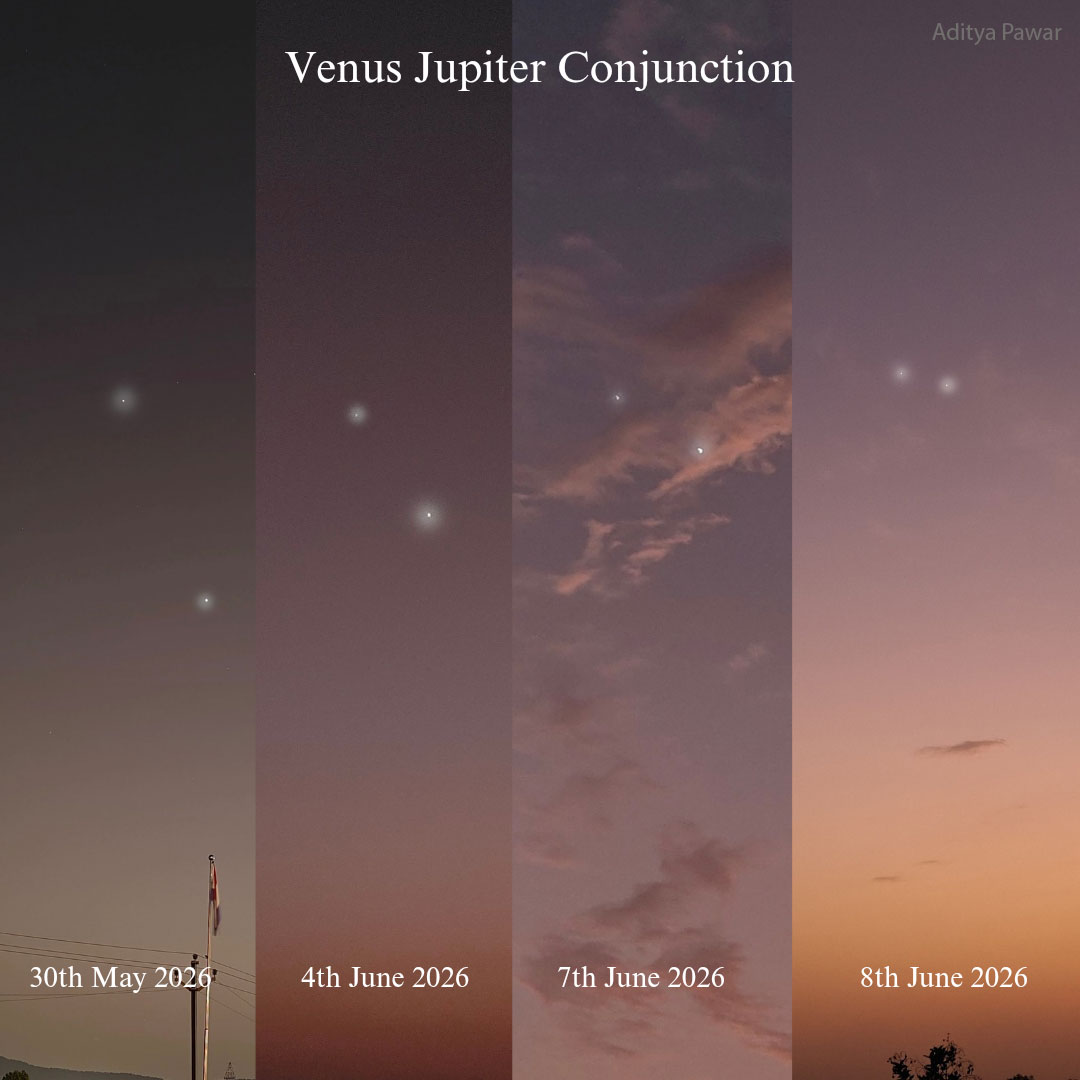
NASA Astronomy Picture of the Day for 2026-06-14 is titled "10 Days of Venus and Jupiter." The release is published as a image and pairs imagery with an official science explainer from NASA. The post highlights a specific observable scene and provides technical context for why the view matters.
5-Second Takeaway
NASA Astronomy Picture of the Day for 2026-06-14 is titled "10 Days of Venus and Jupiter." The release is published as a image and pairs imagery with an official science explainer from NASA.
Why This Matters
The post highlights a specific observable scene and provides technical context for why the view matters.
What Changed
- NASA published this Astronomy Picture of the Day on 2026-06-14.
- The item title is 10 Days of Venus and Jupiter and the media type is image.
- The image and caption describe observable features highlighted in this release.
- NASA's accompanying explanation provides observation context and interpretation notes.
- Caption excerpt: Venus and Jupiter may have caught your attention lately. The recent close conjunction of the two brightest planets in recent evening skies has been hard to miss. With Jupiter at the top, starting on May 30 and ending on June 8, their close approach was chronicled daily, left to right, in the featured panels from Maharashtra, India. Near the western horizon, the evening sky colors and exposures used for each panel depend on the local conditions near sunset. At their closest on June 9, the celestial pair appeared to be only about three times the width of a full moon apart. Of course, on that date, the two planets were physically separated by over 600 million kilometers in their orbits around the Sun. In the coming days, Jupiter will slowly settle into the sunset glare, but Venus will continue to move farther from the Sun in the western sky to excel in its current role as the brilliant ev
- Full mission and image details are available in the official APOD entry.
- NASA APOD page: https://apod.nasa.gov/apod/image/2606/VenusJupiter10_Pawar_1080.jpg
- NASA open API portal: https://api.nasa.gov/
Key Facts
- NASA published this Astronomy Picture of the Day on 2026-06-14.
- The item title is 10 Days of Venus and Jupiter and the media type is image.
- The image and caption describe observable features highlighted in this release.
- NASA's accompanying explanation provides observation context and interpretation notes.
Key Numbers
- NASA published this Astronomy Picture of the Day on 2026-06-14.
- The item title is 10 Days of Venus and Jupiter and the media type is image.
- Caption excerpt: Venus and Jupiter may have caught your attention lately. The recent close conjunction of the two brightest planets in recent evening skies has been hard to miss. With Jupiter at the top, starting on May 30 and ending on June 8, their close approach was chronicled daily, left to right, in the featured panels from Maharashtra, India. Near the western horizon, the evening sky colors and exposures used for each panel depend on the local conditions near sunset. At their closest on June 9, the celestial pair appeared to be only about three times the width of a full moon apart. Of course, on that date, the two planets were physically separated by over 600 million kilometers in their orbits around the Sun. In the coming days, Jupiter will slowly settle into the sunset glare, but Venus will continue to move farther from the Sun in the western sky to excel in its current role as the brilliant ev
- NASA APOD page: https://apod.nasa.gov/apod/image/2606/VenusJupiter10_Pawar_1080.jpg