
NGC 3660 and Burçin's Galaxy (May 26, 2026)
May 26, 2026 6:11am
NASA Astronomy Picture of the Day for 2026-05-26 is titled "NGC 3660 and Burçin's Galaxy." The release is published as a image and pairs imagery with an officia...
NASA Astronomy Picture of the Day for 2026-05-26 is titled "NGC 3660 and Burçin's Galaxy." The release is published as a image and pairs imagery with an official science explainer from NASA. The post highlights a specific observable scene and provides technical context for why the view matters.
5-Second Takeaway
NASA Astronomy Picture of the Day for 2026-05-26 is titled "NGC 3660 and Burçin's Galaxy." The release is published as a image and pairs imagery with an official science explainer from NASA.
Why This Matters
The post highlights a specific observable scene and provides technical context for why the view matters.
What Changed
- NASA published this Astronomy Picture of the Day on 2026-05-26.
- The item title is NGC 3660 and Burçin's Galaxy and the media type is image.
- The image and caption describe observable features highlighted in this release.
- NASA's accompanying explanation provides observation context and interpretation notes.
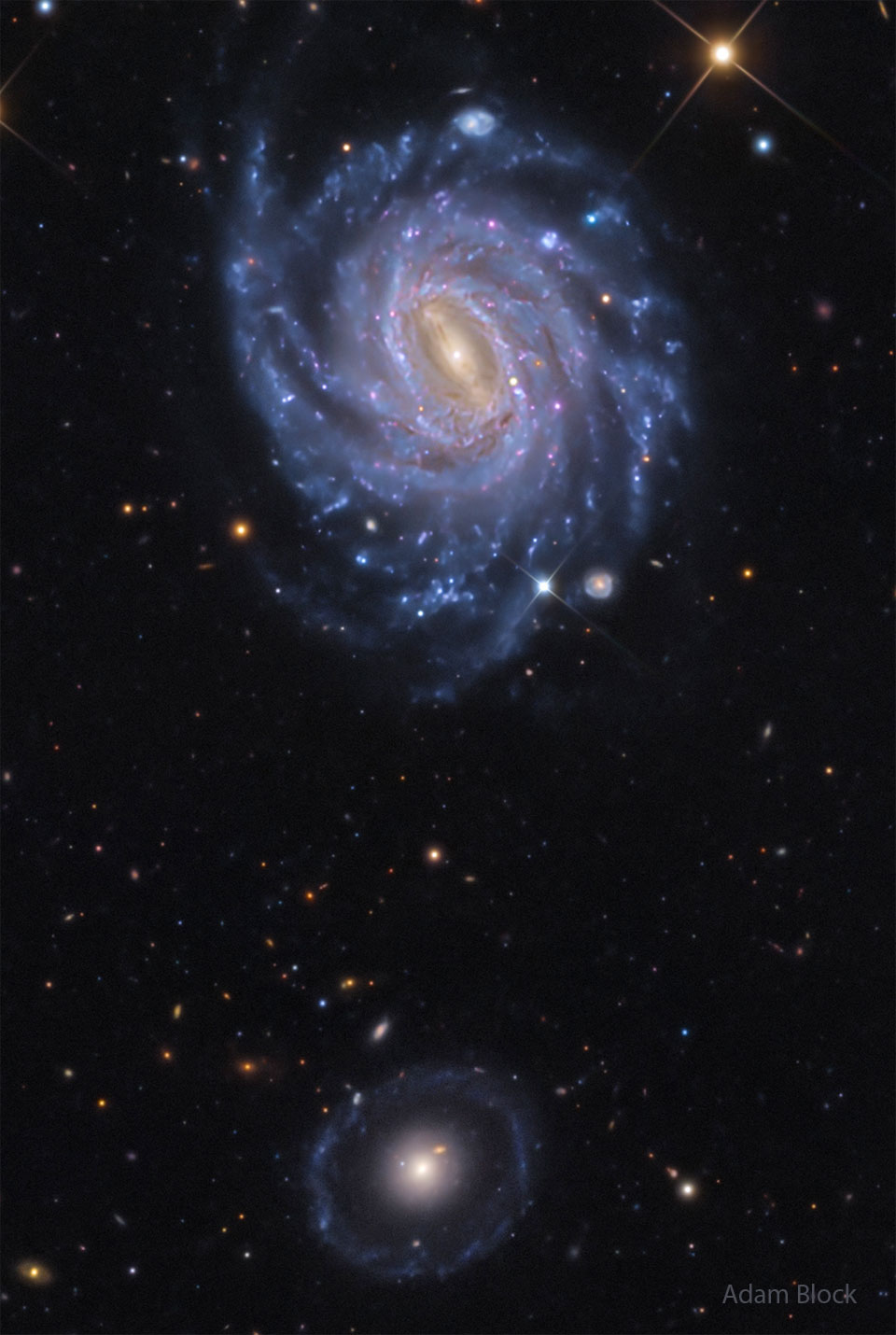
- Caption excerpt: The upper galaxy might be more photogenic, but the lower galaxy is more unusual. The galaxy up top is NGC 3660, a spiral galaxy similar to our own Milky Way galaxy in that it has several bright blue spiral arms and a central bar of stars, dust, and gas. Captured by chance in the featured deep and colorful image, surprisingly, is SN 2026cff, a supernova found just to the right of the central bar. Farther in the distance is the bottom galaxy, known informally as Burçin’s galaxy, but formally cataloged as LEDA 1000714. The center of this galaxy appears to be an old elliptical galaxy, but it is strangely surrounded by not one but two rings of stars. What created Burçin's galaxy is a mystery and remains a continuing topic of research, but it likely involves the accretion of one or more smaller galaxies.
- Full mission and image details are available in the official APOD entry.
- NASA APOD page: https://apod.nasa.gov/apod/image/2605/Ngc3660Burcin_Block_960.jpg
- NASA open API portal: https://api.nasa.gov/
Key Facts
- NASA published this Astronomy Picture of the Day on 2026-05-26.
- The item title is NGC 3660 and Burçin's Galaxy and the media type is image.
- The image and caption describe observable features highlighted in this release.
- NASA's accompanying explanation provides observation context and interpretation notes.
Key Numbers
- NASA published this Astronomy Picture of the Day on 2026-05-26.
- The item title is NGC 3660 and Burçin's Galaxy and the media type is image.
- Caption excerpt: The upper galaxy might be more photogenic, but the lower galaxy is more unusual. The galaxy up top is NGC 3660, a spiral galaxy similar to our own Milky Way galaxy in that it has several bright blue spiral arms and a central bar of stars, dust, and gas. Captured by chance in the featured deep and colorful image, surprisingly, is SN 2026cff, a supernova found just to the right of the central bar. Farther in the distance is the bottom galaxy, known informally as Burçin’s galaxy, but formally cataloged as LEDA 1000714. The center of this galaxy appears to be an old elliptical galaxy, but it is strangely surrounded by not one but two rings of stars. What created Burçin's galaxy is a mystery and remains a continuing topic of research, but it likely involves the accretion of one or more smaller galaxies.
- NASA APOD page: https://apod.nasa.gov/apod/image/2605/Ngc3660Burcin_Block_960.jpg