
The Large Magellanic Cloud (July 23, 2026)
July 23, 2026 6:11am
NASA Astronomy Picture of the Day for 2026-07-23 is titled "The Large Magellanic Cloud." The release is published as a image and pairs imagery with an official...
NASA Astronomy Picture of the Day for 2026-07-23 is titled "The Large Magellanic Cloud." The release is published as a image and pairs imagery with an official science explainer from NASA. The post highlights a specific observable scene and provides technical context for why the view matters.
5-Second Takeaway
NASA Astronomy Picture of the Day for 2026-07-23 is titled "The Large Magellanic Cloud." The release is published as a image and pairs imagery with an official science explainer from NASA.
Why This Matters
The post highlights a specific observable scene and provides technical context for why the view matters.
What Changed
- NASA published this Astronomy Picture of the Day on 2026-07-23.
- The item title is The Large Magellanic Cloud and the media type is image.
- The image and caption describe observable features highlighted in this release.
- NASA's accompanying explanation provides observation context and interpretation notes.
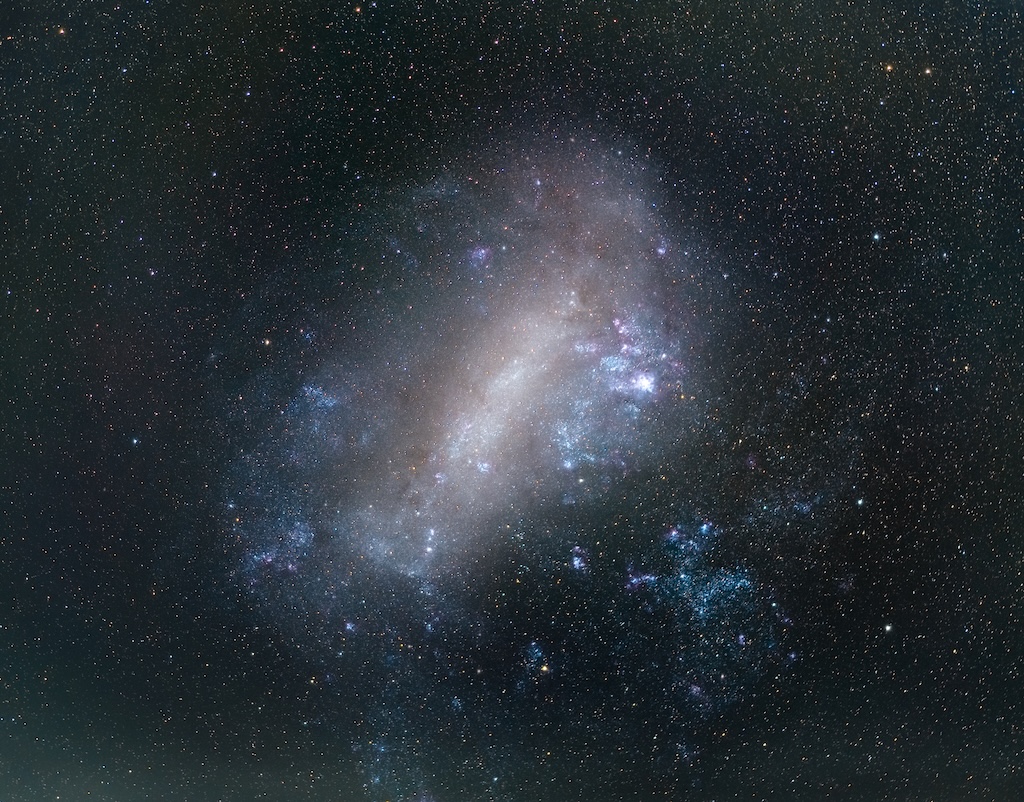
- Caption excerpt: Have you ever seen another galaxy with your own eyes? The featured image shows the Large Magellanic Cloud (LMC), one of the closest neighbors of our Milky Way. If you are anywhere south of latitude 20° N (but the further south, the better), you can see it with the unaided eye if you go to a dark sky location, away from big cities and light polution. It is a dwarf irregular galaxy about 163,000 light-years away, and a member of our Local Group of galaxies. Despite being small, with a total mass approximately equivalent to 10% - 20% of the mass of the Milky Way, the LMC is very actively forming stars. This is likely due in part to the gravitational push and pull of tides caused by the Milky Way on the LMC. Some astronomers have predicted that it will collide with the Milky Way in in about 2 billion years.
- Full mission and image details are available in the official APOD entry.
- NASA APOD page: https://apod.nasa.gov/apod/image/2607/LMC_1024.jpg
- NASA open API portal: https://api.nasa.gov/
Key Facts
- NASA published this Astronomy Picture of the Day on 2026-07-23.
- The item title is The Large Magellanic Cloud and the media type is image.
- The image and caption describe observable features highlighted in this release.
- NASA's accompanying explanation provides observation context and interpretation notes.
Key Numbers
- NASA published this Astronomy Picture of the Day on 2026-07-23.
- Caption excerpt: Have you ever seen another galaxy with your own eyes? The featured image shows the Large Magellanic Cloud (LMC), one of the closest neighbors of our Milky Way. If you are anywhere south of latitude 20° N (but the further south, the better), you can see it with the unaided eye if you go to a dark sky location, away from big cities and light polution. It is a dwarf irregular galaxy about 163,000 light-years away, and a member of our Local Group of galaxies. Despite being small, with a total mass approximately equivalent to 10% - 20% of the mass of the Milky Way, the LMC is very actively forming stars. This is likely due in part to the gravitational push and pull of tides caused by the Milky Way on the LMC. Some astronomers have predicted that it will collide with the Milky Way in in about 2 billion years.
- NASA APOD page: https://apod.nasa.gov/apod/image/2607/LMC_1024.jpg